
Wasps Under the Eaves? Why Every Oxford Roof Job Starts With a Walk Round First
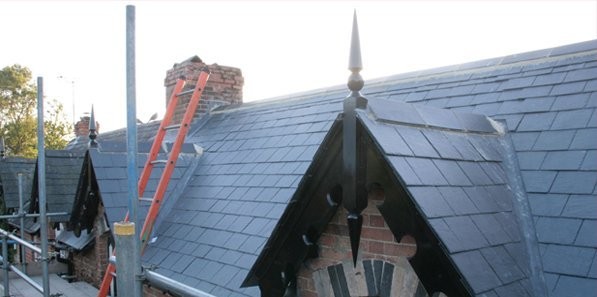
A homeowner off the Woodstock Road rang us last month about a damp patch spreading across a bedroom ceiling, and within ten minutes of getting the ladder up it was obvious the leak was the least of the problem. A wasp nest the size of a football had taken up residence behind the fascia board, right where the felt lap had failed and let water track in for the best part of a year.
It’s the kind of thing that never makes the quote. You price up a re-roof — strip the old tiles, check the battens, lay a new breather membrane, re-lap at 150mm, dress in new Code 4 lead to the chimney — and then the decking comes up and there’s a colony living in the soffit you hadn’t budgeted for. Stinging insects cause a real share of anaphylaxis cases in adults each year, so once we find a nest that’s active, the job stops until a licensed pest technician has cleared it. No crew of ours is disturbing a colony by hand forty feet up a ladder.
Oxford’s older stock — the Victorian terraces around Jericho, the stone cottages out towards Stonesfield — throws up wood-boring beetle damage just as often. It rarely shows from the ground. You don’t know a fascia’s gone soft until you’re up on the batten gauge and it crumbles under a boot. When that happens we down tools on the reframe and get the full extent checked before a single new tile goes back on, because covering up compromised timber with a nice new tiled roof just buries the problem for the next people.
Over forty years we’ve learned that the walk round before tear-off — eaves, soffits, ridge, hips, every gap where something could have got in — saves more grief than any tool on the van. It costs nothing and it means the quote you’re given is the job you actually get.
If you’ve got a roof in Oxford that needs a proper look before anyone commits to a price, give Roof Doctor Oxford a call on 01865 841664 or drop us a line through roofdoctor-oxford.co.uk.